JWT Tokens used by tasks were exposed in logs. This could allow UI users to act as Dag Authors.
Users are advised to upgrade to Airflow version that contains fix.
Users are recommended to upgrade to version 3.2.0, which fixes this issue.
Pillow is vulnerable to a FITS GZIP decompression bomb
Pillow is a Python imaging library. Versions 10.3.0 through 12.1.1 did not limit the amount of GZIP-compressed data read when decoding a FITS image, making them vulnerable to decompression bomb attacks. A specially crafted FITS file could cause unbounded memory consumption, leading to denial of service (OOM crash or severe performance degradation). If users are unable to immediately upgrade, they should only open specific image formats, excluding FITS, as a workaround.
Weblate is a web based localization tool. In versions prior to 5.17, repository-boundary validation relies on string prefix checks on resolved absolute paths. In multiple code paths, the check uses startswith against the repository root path. This is not path-segment aware and can be bypassed when the external path shares the same string prefix as the repository path (for example, repo and repo_outside). This issue has been fixed in version 5.17.
Weblate: SSRF via the webhook add-on using unprotected fetch_url()
Weblate is a web based localization tool. In versions prior to 5.17, the webhook add-on did not utilize existing SSRF protections. This issue has been fixed in version 5.17. If developers are unable to update immediately, they can disable the webhook add-on as a workaround.
Weblate: Privilege escalation in the user API endpoint
Weblate is a web based localization tool. In versions prior to 5.17, the user patching API endpoint didn't properly limit the scope of edits. This issue has been fixed in version 5.17.
Weblate: SSRF via Project-Level Machinery Configuration
Weblate is a web based localization tool. In versions prior to 5.17, a user with the project.edit permission (granted by the per-project "Administration" role) can configure machine translation service URLs pointing to arbitrary internal network addresses. During configuration validation, Weblate makes an HTTP request to the attacker-controlled URL and reflects up to 200 characters of the response body back to the user in an error message. This constitutes a Server-Side Request Forgery (SSRF) with partial response read. This issue has been fixed in version 5.17. If developers are unable to immediately upgrade, they can limit available machine
Weblate is a web based localization tool. In versions prior to 5.17, the ZIP download feature didn't verify downloaded files, potentially following symlinks outside the repository. This issue has been fixed in version 5.17.
Weblate: Authenticated SSRF via redirect bypass of ALLOWED_ASSET_DOMAINS in screenshot URL uploads
Weblate is a web based localization tool. In versions prior to 5.17, the ALLOWED_ASSET_DOMAINS setting applied only to the first issued requests and didn't restrict possible redirects. This issue has been fixed in version 5.17.
Weblate: Remote code execution during backup restoration
Weblate is a web based localization tool. In versions prior to 5.17, the project backup didn't filter Git and Mercurial configuration files which could lead to remote code execution under certain circumstances. This issue has been fixed in version 5.17. If developers are unable to update immediately, they can limit the scope of the vulnerability by restricting access to the project backup, as it is only accessible to users who can create projects.
Weblate: JavaScript localization CDN add-on allows arbitrary local file read outside the repository
Weblate is a web based localization tool. In versions prior to 5.17, the translation memory API exposed unintended endpoints, which in turn didn't perform proper access control. This issue has been fixed in version 5.17. If developers are unable to update immediately, they can disable this feature as the CDN add-on is not enabled by default.
Weblate has improper access control for the translation memory API
Weblate is a web based localization tool. In versions prior to 5.17, the translation memory API exposed unintended endpoints, which in turn didn't enforce proper access control. This issue has been fixed in version 5.17. If users are unable to update immediately, they can work around this issue by blocking access to /api/memory/ in the HTTP server, which removes access to this feature.
Weblate: Improper access control for pending tasks in API
Weblate is a web based localization tool. In versions prior to 5.17, the tasks API didn't verify user access for pending tasks. This could expose logs of in-progress operations to users who don't have access to given scope. The attacker needs to brute-force the random UUID of the task, so exploiting this is unlikely with the default API rate limits. This issue has been fixed in version 5.17.
Apache Airflow: Sensitive Azure Service Bus connection string (and possibly other providers) exposed to users with view access
The `access_key` and `connection_string` connection properties were not marked as sensitive names in secrets masker. This means that user with read permission could see the values in Connection UI, as well as when Connection was accidentaly logged to logs, those values could be seen in the logs. Azure Service Bus used those properties to store sensitive values. Possibly other providers could be also affected if they used the same fields to store sensitive data.
If you used Azure Service Bus connection with those values set or if you have other connections with those values storing sensitve values, you should upgrade Airflow to 3.1.8
Apache Airflow: RCE by race condition in example_xcom dag
The example example_xcom that was included in airflow documentation implemented unsafe pattern of reading value
from xcom in the way that could be exploited to allow UI user who had access to modify XComs to perform arbitrary
execution of code on the worker. Since the UI users are already highly trusted, this is a Low severity vulnerability.
It does not affect Airflow release - example_dags are not supposed to be enabled in production environment, however
users following the example could replicate the bad pattern. Documentation of Airflow 3.2.0 contains version of
the example with improved resiliance for that case.
Users who followed that
Upsonic 0.71.6 contains a remote code execution vulnerability in its MCP server/task creation functionality. The application allows users to define MCP tasks with arbitrary command and args values. Although an allowlist exists, certain allowed commands (npm, npx) accept argument flags that enable execution of arbitrary OS commands. Maliciously crafted MCP tasks may lead to remote code execution with the privileges of the Upsonic process. In version 0.72.0 Upsonic added a warning about using Stdio servers being able to execute commands directly on the machine.
pyLoad's Session Not Invalidated After Permission Changes
### Summary
The `pyload` application does not properly invalidate or modify sessions upon changes made to a user's permissions.
### Details
Whenever an administrator changes the permissions a specific account has, they do not expect that account still being able to access data that their new permissions do not allow. This is not the case for the `pyload` application, as a user with a valid session can still perform the actions.
### PoC
Take a user with all the permissions, as shown below.
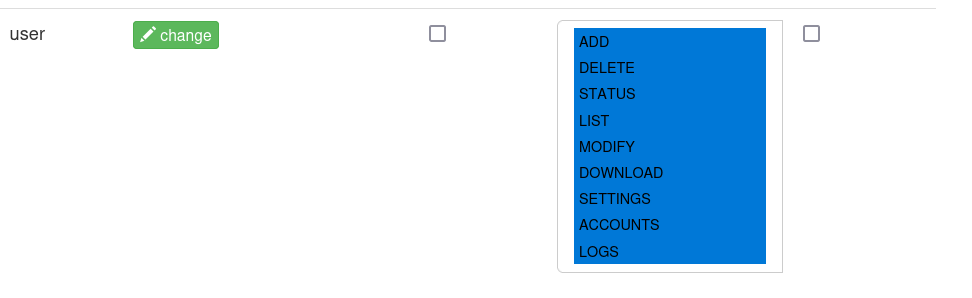
We now log in as this user.
. The _ldap_res_to_model method in the UserApi class only performed string-to-boolean conversion when user_enabled_invert was True. When False, the raw string value from LDAP (e.g., "FALSE") was used directly. Since non-empty strings are truthy in Python, users marked as disabled in LDAP were treated as enabled by Keystone, allowing them to authenticate and perform actions. All deployments using the LDAP identity backend without user_enabled_invert=True
Out-of-bounds read/write during remote profiling and asyncio process introspection when connecting to malicious target
The "profiling.sampling" module (Python 3.15+) and "asyncio introspection capabilities" (3.14+, "python -m asyncio ps" and "python -m asyncio pstree") features could be used to read and write addresses in a privileged process if that process connected to a malicious or "infected" Python process via the remote debugging feature. This vulnerability requires persistently and repeatedly connecting to the process to be exploited, even after the connecting process crashes with high likelihood due to ASLR.
PraisonAI Browser Server allows unauthenticated WebSocket clients to hijack connected extension sessions
PraisonAI is a multi-agent teams system. In versions below 4.5.139 of PraisonAI and 1.5.140 of praisonaiagents, the browser bridge (praisonai browser start) is vulnerable to unauthenticated remote session hijacking due to missing authentication and a bypassable origin check on its /ws WebSocket endpoint. The server binds to 0.0.0.0 by default and only validates the Origin header when one is present, meaning any non-browser client that omits the header is accepted without restriction. An unauthenticated network attacker can connect, send a start_session message, and the server will route it to the first idle browser-extension WebSocket (effect
PraisonAI: Critical RCE via `type: job` workflow YAML
PraisonAI is a multi-agent teams system. In versions below 4.5.139 of PraisonAI and 1.5.140 of praisonaiagents, the workflow engine is vulnerable to arbitrary command and code execution through untrusted YAML files. When praisonai workflow run <file.yaml> loads a YAML file with type: job, the JobWorkflowExecutor in job_workflow.py processes steps that support run: (shell commands via subprocess.run()), script: (inline Python via exec()), and python: (arbitrary Python script execution)—all without any validation, sandboxing, or user confirmation. The affected code paths include action_run() in workflow.py and _exec_shell(), _exec_inline_python